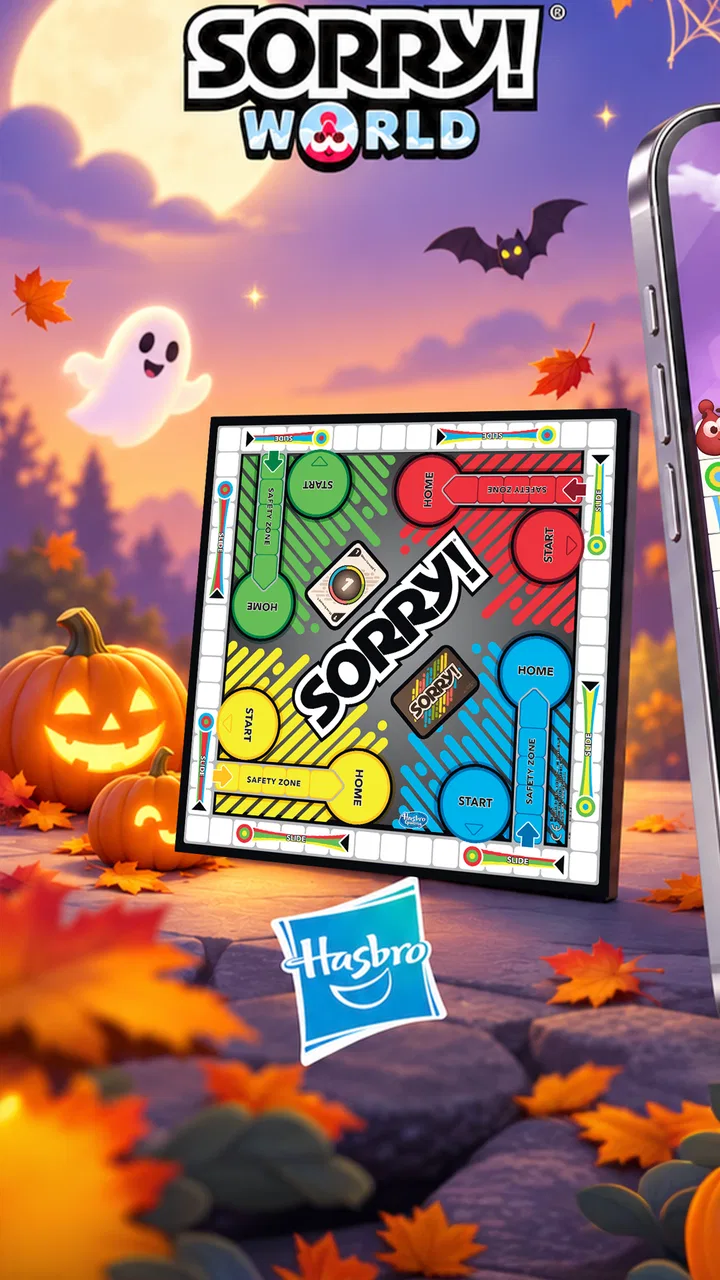
Sorry! World Online Board game
- 4.5
- Rating
- 1.00M
- Installs
- Free
- Price

 Analysis by App-foxy
I spent time with Sorry! World as a casual board game for quick matches with friends and family, and my first impression was straightforward: it is easiest to enjoy when I treat it as a social game rather than a serious strategy competition. The familiar race-around-the-board format is immediately approachable, while online multiplayer gives it a reason to stay installed after the first few rounds. I can explain the basic idea to a new player quickly, start a match without a long tutorial, and settle into a rhythm that works well for short breaks.
That simplicity is also the game’s main challenge. Players who want deep tactical systems, a large collection of modes, or a highly competitive ranked experience may find the formula limited. I see it as a convenient digital version of a living-room board game: best when the people involved are the focus, and less compelling when I am looking for a complex solo game with lots of long-term progression.
How I use Sorry! World for everyday matches
The game comes from Gameberry Labs and sits in the board category, with a free download and an Everyone age rating. The current version is 0.36.0, and it runs on Android 7.0 or later. Those details make it accessible for households with a mixture of newer and older Android phones, which matters when the goal is to invite relatives or friends instead of checking whether everyone owns a recent device.
You May Also Like

 Blood Strike: 2.5 Anniversary
Blood Strike’s Loadouts Turn Every Drop Into a Tactical Gamble
A close look at Blood Strike’s custom loadouts: how fast access to signature weapons reshapes its battle royale rhythm, rewards preparation, and narrows the gap between fights.

 Pandora - Music & Podcasts
Pandora’s Music Is Easy to Start, but Harder to Recover
Pandora’s strength is its low-effort path from a seed to a station. Its weak spot is how much confidence it asks you to place in connection, setup, and quiet recovery.

 8 Ball Pool
 Is Built on Rivalries, Rematches, and Routine
A close look at the rivalries, rematches, shared routines, and unanswered safety questions that turn a quick pool match into a persistent mobile community.

 Samsung Music
’s Quiet Strength Is Playing What You Already Own
Its reach comes less from spectacle than from dependable access to a personal library. That simplicity is both the app’s strongest retention engine and its ceiling.

 AccuWeather: Weather Radar
AccuWeather Review: A Quick, Clear Forecast for Everyday Decisions
For everyday plans, the best forecast is the one you can understand quickly. AccuWeather makes rain timing, radar, and local conditions easy to act on, with a few trade-offs.

 Hill Climb Racing
Why Hill Climb Racing Still Turns Crashes Into One More Run
A tiny car, a bumpy hill and one more upgrade: Hill Climb Racing keeps resurfacing because its simple chaos makes every near-miss feel personal.
More From Our News Desk



My usual workflow is simple. I open the game, choose an online match with people I know, and focus on the turn in front of me rather than trying to create a complicated plan several rounds ahead. That is a useful mindset for this kind of board game because luck affects movement, and an apparently safe position can change quickly. I find the experience more enjoyable when everyone agrees beforehand that the match is meant to be light entertainment.
A realistic use case is a family waiting for dinner or taking a short break during a visit. One person can invite the others, and the group can play from separate phones instead of sharing one screen. That removes the small arguments that often happen when several people reach for the same physical board, although it also means the game depends on every participant paying attention to their own device.
The online format is especially useful for friends who live apart. A traditional board game requires everyone to be in the same room, while this version lets the social part continue across distance. I would still choose a physical board for a long evening around a table, because handling pieces and reacting to other players face to face has its own charm. I choose this app when convenience matters more than the physical experience.
The store listing shows an average rating of 4.5 from around 21 thousand ratings, and the game has passed one million installs. I read that as a sign that the basic idea is connecting with a broad casual audience, not as proof that every player will enjoy it equally. People who already like this style of board game will understand the appeal quickly, while players who dislike turn-based movement may not be persuaded by the online presentation.
What makes the first few games comfortable
The rules are familiar enough that I do not need to spend much time learning menus before playing. That lowers the barrier for children and occasional players, provided an adult explains the turn flow and helps with the first match. The Everyone rating fits that family-friendly positioning, but I would still supervise younger children if they are using a shared device or making purchases.
I recommend starting with a relaxed match instead of immediately trying to optimize every move. New players often make the mistake of treating each move as a race toward the finish, but a safer position can be more valuable than the most ambitious one. I also find it helpful to say out loud whose turn it is when playing with family members who are unfamiliar with online board games. That small habit prevents confusion when several people are chatting at once.
Another practical habit is to keep the first session short. A new player can understand the core loop after a few turns, but repeated matches are where the push and pull of risk becomes clearer. If I schedule a large group session without first checking that everyone understands the basics, the game can feel slower than it really is. A brief trial round gives the group a common pace.
Settings and spending decisions worth checking
I would check the available settings before inviting a group, especially sound and notification behavior. Board games can become irritating when effects are too loud in a public place, while turning everything off may make it harder to notice a turn. I prefer a level that lets me follow the match without making the phone disruptive. The exact balance depends on whether I am playing at home, on public transport, or beside other people.
I also make sure everyone knows that the game is free to download but includes in-app purchases ranging from $0.49 to $99.99 per item. That is a meaningful difference between installing the game for a quick family match and allowing unrestricted spending. On a child’s device, I would review the device’s purchase controls before handing it over. The game is suitable for Everyone, but an age-friendly game can still deserve sensible payment boundaries.
Experienced players should also decide whether they want to use a match as background entertainment or as a focused activity. If I am multitasking, I am more likely to miss a turn or make a rushed move. A repeatable routine helps: open the game, check whose turn is active, silence unrelated distractions, and only then commit to a move. This is not a hidden feature, but it makes online play feel much smoother.
When playing with friends, I like agreeing on the session’s tone before starting. Some groups enjoy teasing and dramatic reversals; others become frustrated when a lucky move changes the order. Setting expectations prevents a casual match from turning into an argument. The app supplies the board and the turns, but the quality of the session still depends heavily on the people using it.
Faster patterns that improve ordinary play
The most useful improvement I found was not a secret shortcut but a consistent way of reading the board. Before moving, I check which pieces are exposed, which routes are congested, and whether a move creates a problem on my next turn. This takes only a moment once it becomes a habit. It is more reliable than moving the piece that appears closest to the destination every time.
I also avoid spending too long calculating outcomes that depend on luck. In this format, there is a point where extra thought stops adding value. I compare the safer option with the aggressive option, consider who benefits if the move fails, and then act. That keeps the match moving and makes the experience better for everyone waiting online.
A useful group habit is to keep commentary separate from decision time. Players can joke while others are thinking, but a short pause before each move helps prevent accidental choices. This matters most when a match includes children or several conversations at once. The game becomes faster not because the board changes, but because the players reduce avoidable hesitation.
I would also use repeat sessions to learn opponents’ habits rather than memorizing a single winning pattern. A friend who always protects one piece may leave another vulnerable, while a player who takes every risky opportunity may create openings later. Watching these tendencies adds a small layer of personality to otherwise familiar rules. It is one reason online matches with the same group can remain entertaining longer than isolated games against unknown players.
For a family group, I recommend rotating who creates or organizes the session. That avoids making one person responsible for every invitation and gives less experienced players a chance to become comfortable with the flow. It also exposes small differences in how people prefer to play. The result is usually a more inclusive match than allowing the most confident player to control every decision.
Where the simple design reaches its limits
Sorry! World is not the right choice for every board-game fan. If I want a campaign, detailed resource management, deck construction, or a large strategic decision tree, I would choose a different game. This title is built around recognizable board-game movement and multiplayer interaction, so its appeal comes from accessibility and social replay rather than elaborate systems.
Luck can also be a genuine source of friction. A careful player may make sensible choices and still lose because the movement outcome does not cooperate. I enjoy that unpredictability in a short match, but I would not use the game as a serious test of skill. Players who need every result to feel fully controlled should look for a more deterministic strategy board game.
Online play introduces another limitation: the group’s experience depends on participation. A physical board lets everyone see the same state and naturally reminds people to stay involved. On separate phones, someone can become distracted, miss a turn, or leave the session. I find the app works best when the group agrees to remain available for the duration of a match instead of treating it as something to check occasionally.
The free-to-play structure deserves a realistic look as well. I appreciate being able to start without paying, but the presence of purchases means I would not assume that every part of the experience is equally free of spending prompts. I keep purchase decisions separate from the fun of the match and would not buy anything simply because a round went badly. That boundary is especially important for younger players.
There is also a difference between playing with close friends and playing with strangers. Friends bring conversation and shared history, which gives a basic board game more personality. Unknown opponents may be convenient when nobody is available, but the social reward is less predictable. I would install this primarily for a known group, not because I expect it to replace every other online game.
Who should install it and who should skip it
I recommend it to families who want an easy online board game, friends looking for short turn-based matches, and casual players who already enjoy the familiar race-to-the-finish style. It is also a sensible option for someone who wants a free starting point and does not need a complicated ruleset. The broad age rating and modest Android requirement make it practical for mixed-device groups.
I would skip it if my priority were a deep solo experience, a large competitive ladder, or a game where long-term mastery depends mainly on planning rather than chance. I would also avoid making it the centerpiece of a gathering where everyone wants face-to-face interaction. In that situation, a physical board may create better conversation, while a more advanced digital board game may suit players seeking richer tactics.
For new users, my best advice is to play one learning match without worrying about winning, review the settings before the next session, and agree on spending boundaries if children are involved. After that, use the quick board-reading routine: check vulnerable pieces, compare safe and risky moves, and commit without overthinking. Those habits make the game feel more responsive and reduce the small delays that can make online board games drag.
After using it, I see Sorry! World as a friendly multiplayer board game rather than a demanding strategy title. Gameberry Labs has kept the entry point approachable, and the combination of free access, online play, and familiar rules gives it a clear place on a phone. Its 1M+ installs and 4.5 average rating help explain why it has found an audience, but the real test is whether your friends or family will actually join the same matches.
My final recommendation is positive with a clear condition: install it if you want convenient, repeatable social rounds and are comfortable with luck shaping the result. Use the settings thoughtfully, keep purchases controlled, and treat each match as shared entertainment instead of a formal contest. With that expectation, Sorry! World is an enjoyable free board-game companion. If you want depth, certainty, or a richer solo structure, I would spend my time elsewhere.
FAQs for Sorry! World Online Board game
01What is Sorry! World - Board Game?
Sorry! World - Board Game is a digital adaptation of the classic board game, "Sorry!". It brings the nostalgic experience of the tabletop game to your mobile device, allowing you to play with friends online or against AI. The app features new game modes, vibrant graphics, and user-friendly controls.
02How do I play Sorry! World - Board Game?
The objective of Sorry! World is to move your pieces from the start to the home base before your opponents. Players draw cards to determine their moves, and landing on an opponent's piece sends it back to the start. The app provides tutorials for beginners, making it easy to learn.
03Is Sorry! World - Board Game free to download and play?
Yes, Sorry! World - Board Game is free to download on both Android and iOS platforms. However, it may offer in-app purchases for additional features, such as special game modes or cosmetic upgrades. These purchases are optional and not required for the standard gameplay experience.
04Can I play Sorry! World - Board Game with friends online?
Absolutely! Sorry! World - Board Game includes a multiplayer mode where you can invite friends to join a game online. You can also compete against players worldwide in ranked matches, making it an engaging social experience. The app supports both real-time and turn-based multiplayer options.
05What are the system requirements for Sorry! World - Board Game?
To run Sorry! World - Board Game smoothly, you'll need a device with Android 5.0 or higher, or iOS 10.0 or later. Ensure you have enough storage space for the app and a stable internet connection for online multiplayer. Check the app store for the latest updates and compatibility information.
Pros
- Engaging online multiplayer mode.
- Vibrant and colorful graphics.
- Easy-to-learn gameplay mechanics.
- Regular updates with new features.
- Cross-platform support for Android and iOS.
Cons
- Occasional connectivity issues.
- In-app purchases can be pricey.
- Ads can be intrusive at times.
- Limited single-player options.
- Requires a stable internet connection.

Sorry! World Online Board game
Gallery